// How to Look After Paint Protection Film (PPF)
Paint protection film takes the grit, chips and messy chemistry of the road so your paint does not have to. It is more forgiving than bare paint, but it still needs sensible care.
Look after it well and it will keep doing its job for years. Our colour PPF carries an 8-year warranty, and our clear PPF carries an 8 to 12 year warranty, depending on the film.
This is the aftercare we talk through after PPF at our Knaresborough studio.
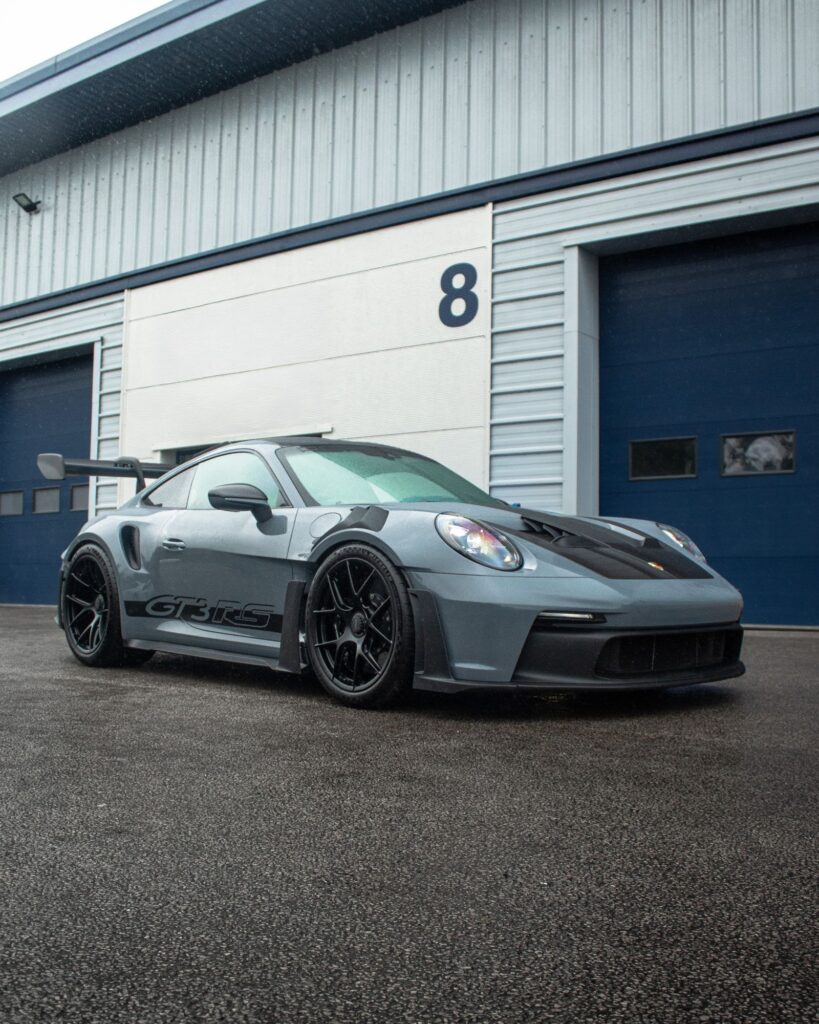
You can see a full-car example on our Porsche 992 GT3 RS Weissach with full PPF.
The first week after fitting
Fresh PPF needs a short settling period. The film has been washed, squeegeed and lined up on the car, and a little moisture can remain under the surface.
Wait about a week before the first wash. During that time:
- Small water bubbles or a slight haze can appear while the film settles. This is often normal and can take up to 30 days to clear.
- Do not pick at edges, and do not try to squeeze bubbles out yourself.
- Avoid automatic car washes and keep pressure washers away from edges.
- If bird droppings or a fuel splash land on the film, dab them with a soft, wet microfibre. Do not scrub.
- If a haze deepens, an edge lifts, or something looks clearly wrong, contact us.
When you collect the car, we will tell you what to expect for your film.
How to wash PPF
Hand washing is the most reliable way to clean PPF. Automatic brush washes can scuff the surface and catch edges, so avoid them.
- Rinse thoroughly first, especially the front bumper, leading edge of the bonnet, mirrors and lower body.
- Wash with a pH-neutral, PPF-safe shampoo, using a clean, soft mitt and the two-bucket method.
- Work lightly from the top down. You do not need to scour the film.
- Rinse well and dry with a soft, clean microfibre.
If you also have a ceramic coating over the PPF, use coating-safe products and the same gentle method. Ceramic over PPF is a separate service, from £200 +VAT. It makes dirt release more easily, but you still need a careful wash.
There is a fuller method in our guide to washing a wrapped, PPF or ceramic-coated car.
Products to use — and what to avoid
Use: a pH-neutral shampoo suitable for PPF or ceramic coatings, soft mitts and clean microfibres. A PPF-safe maintenance spray can help gloss film stay slick between washes. On matt or stealth PPF, use only matt-safe products.
Avoid: brush car washes; abrasive polishes and cutting compounds; harsh solvents and household cleaners; wax or polish on matt (stealth) film; and anything that involves heavy rubbing or a cutting pad.
You do not have to buy one particular brand. Choose reputable products described as safe for PPF.
Stealth or matt PPF follows many of the same rules as a matt vinyl wrap: no wax, no polish, and no gloss-enhancing sprays.
Pressure washers: distance and angle
PPF edges are neatly finished, but a close, hard jet can still lift a corner, particularly around mirrors, bumpers and tucked edges.
- Keep the lance at least a metre from the panel.
- Use a fan jet, not a pin jet, and aim at a shallow angle.
- Never fire water directly into an edge, seam, badge or panel gap, especially in the first weeks or after a repair.
If an edge lifts, stop and contact us. Do not try to warm it, glue it or press it back yourself.
Bird droppings, bug splatter and fuel spills
PPF stands up to mess better than bare paint, but stains can still set if they bake on in the sun.
- Soak bird droppings and lift them with a wet microfibre. Do not rub them in dry.
- Bug splatter on the bumper and bonnet should be softened first, not scraped dry.
- Tree sap needs the same gentle approach and a PPF-safe product, not a harsh solvent.
- Fuel spills should be wiped immediately, then washed with pH-neutral shampoo.
If a mark seems etched, do not reach for a cutting compound. Get in touch. Light surface marring in PPF is often a self-healing issue, not a polishing job.
Light scratches and self-healing
Many modern PPF films are self-healing. Light surface scratches and wash swirls in the top layer can ease out with warmth — often from the sun, or from warm (not boiling) water.
Deeper damage is different. A cut through the film, a torn stone chip or a gouge will not heal. The film has already done its job by taking the impact instead of your paint. Contact us and we can advise whether a panel needs to be replaced. Do not pick at a damaged area.
Winter salt and Yorkshire weather
Salt and grit from the A59, the A1 and the lanes around Harrogate and Nidderdale are exactly what PPF is for — but the film still needs cleaning. Left to sit, salty grit becomes an abrasive paste along the sills and front end.
- Rinse more often in winter, even if you are not doing a full wash every time.
- Pay attention to the front bumper, leading edge of the bonnet, behind the number plate, lower doors and arches.
- Never scrape ice off filmed panels. Use de-icer on the glass and let bodywork ice thaw.
Rain itself is not the enemy, though mineral spots can appear when dirty water dries on the surface. See how rain affects PPF and our winter care guide for wrapped and PPF cars.
When to come back for a check
Get in touch if you notice a lifting edge, a corner that has dried proud, a cut through the film, hazing that has not cleared after 30 days, or staining that will not wash out. We would rather see a small area early.
We offer a free check 30 to 90 days after fitting. Get in touch sooner if something looks wrong.
If you already have front coverage and now do more motorway or track miles, we can talk about extending protection with proper panel coverage for how you use the car.
For background, see our PPF service page, how long PPF lasts and PPF FAQs.
Frequently asked questions
How soon can I wash a car after PPF is fitted?
Wait about a week, then hand wash with a pH-neutral, PPF-safe shampoo.
Are small bubbles or a haze normal at first?
They can be. Small water bubbles and a slight haze often appear while the film settles, and they can take up to 30 days to clear. If they worsen, spread, or sit near a lifting edge, contact us.
Do light scratches in PPF really disappear?
Light surface marks often ease with warmth from the sun or warm water. Cuts through the film will not heal and should be checked by us.
Can I wax or polish PPF?
Skip abrasive polishes and cutting compounds. On gloss PPF, only use products described as PPF-safe. On matt or stealth film, avoid wax and polish altogether.
Will winter salt damage PPF?
The film shields the paint from salt and grit, but the surface still needs rinsing so salty dirt does not sit on the film and around the edges.
Can I have a ceramic coating over PPF?
Yes. It is a separate service, from £200 +VAT, and it makes the film easier to clean. See our ceramic coating page, or ask us when you are next in.
Get in touch
If something does not look right with your film, or you would like PPF for a car that is not yet protected, we are happy to help. We fit PPF at our Knaresborough studio, for cars from Harrogate, York, Leeds and further afield.
Get a quote or call 01423 423 449.
Looking for the top Vehicle Wrapping and Modification specialists in Yorkshire?
Get in touch with us today to see how we can help.
More Posts
// How to Protect a Wrapped or PPF Car Through a Yorkshire Winter
View Project
// How to Look After a Vinyl Wrap
View Project